What are sites in SafetyCulture?
Sites in SafetyCulture help you track and manage your team's data by associating it with specific locations, projects, or teams. They provide a shared structure that connects users, content, and activity across multiple features and makes it easier for you to manage access, assignments, and insights as your organization grows.
You can organize sites in a hierarchy that reflects your organization's structure and group them into higher levels, like areas or regions, for easier management of site membership and trend analysis across multiple sites.
Depending on the feature, sites can be used to manage access and assignments, or to organize and filter data.
Feature | Manage access and assignments | Organization and filtering |
|---|---|---|
Templates | Yes | Yes |
Inspections | Yes | Yes |
Actions | Yes | Yes |
Training | Yes | No |
Issues | Yes | Yes |
Assets | Yes | Yes |
Heads Up | Yes | No |
Investigations | No | Yes |
Documents | No | Yes |
Analytics | No | Yes |
Contractors | No | Yes |
Exploring sites
Site hierarchy
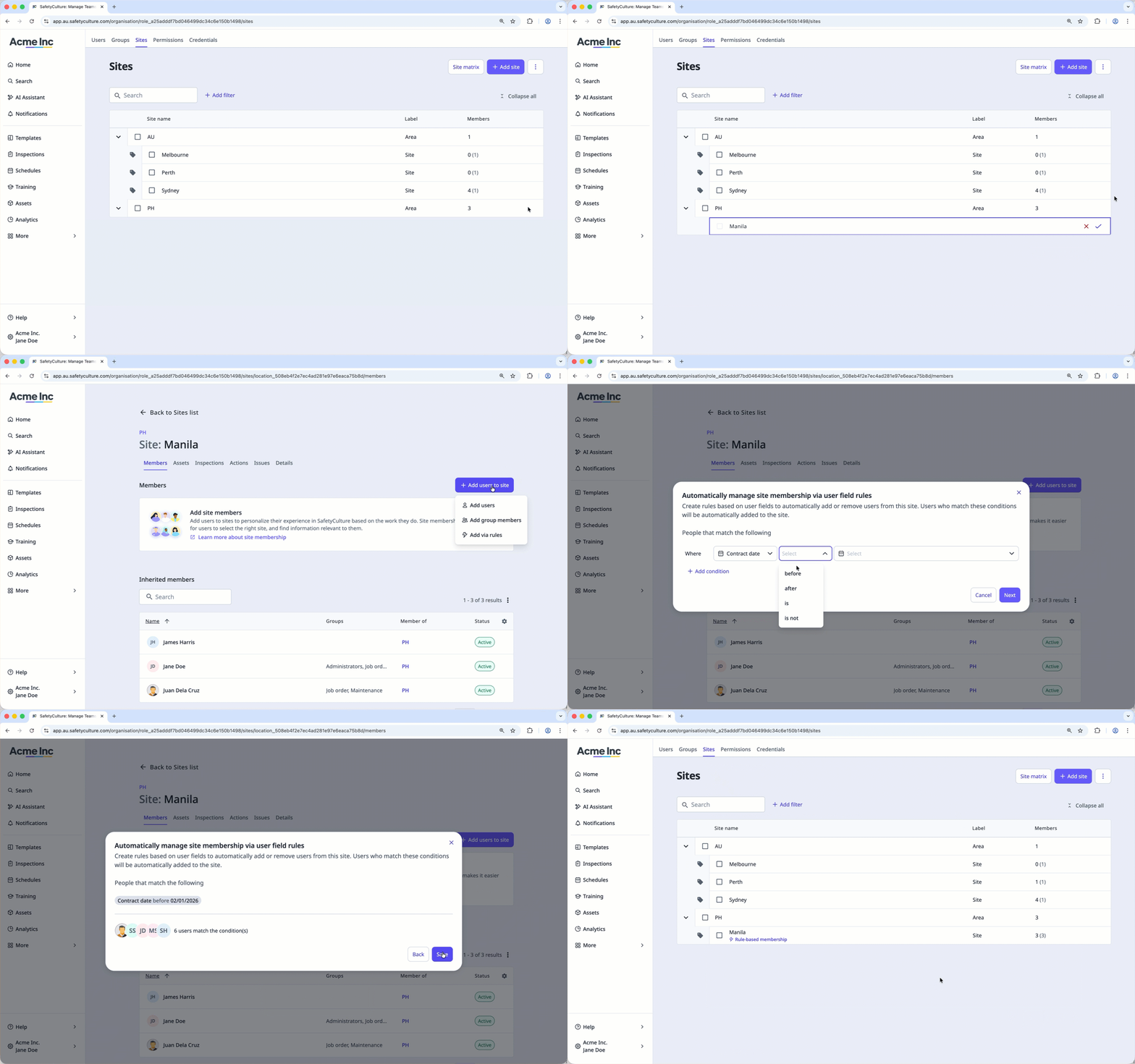
Use sites to mirror your organization's structure by creating a clear hierarchy of business units or locations. This hierarchy not only organizes your team's data, such as inspections, issues, and actions, but it also visually maps the relationships between sites, making overall management more efficient.
Site time zones
Set the time zone for each site's profile to ensure the new Schedules experience aligns with the site's location, keeping timing consistent for assignees regardless of their own account settings. For example, if you set a schedule for both the Sydney and Manila sites, each assignee sees it based on the time zone of the site they're a member of. Manage site time zones individually or in bulk to keep your time zones up to date across your organization.
Customize hierarchy labels to match your organization's structure and terminology for better clarity and consistency.
Site membership
Add users as site members so that they can gain access to shared entities like templates and inspections to complete assigned tasks, view dashboards in Analytics based on their site membership, and more.
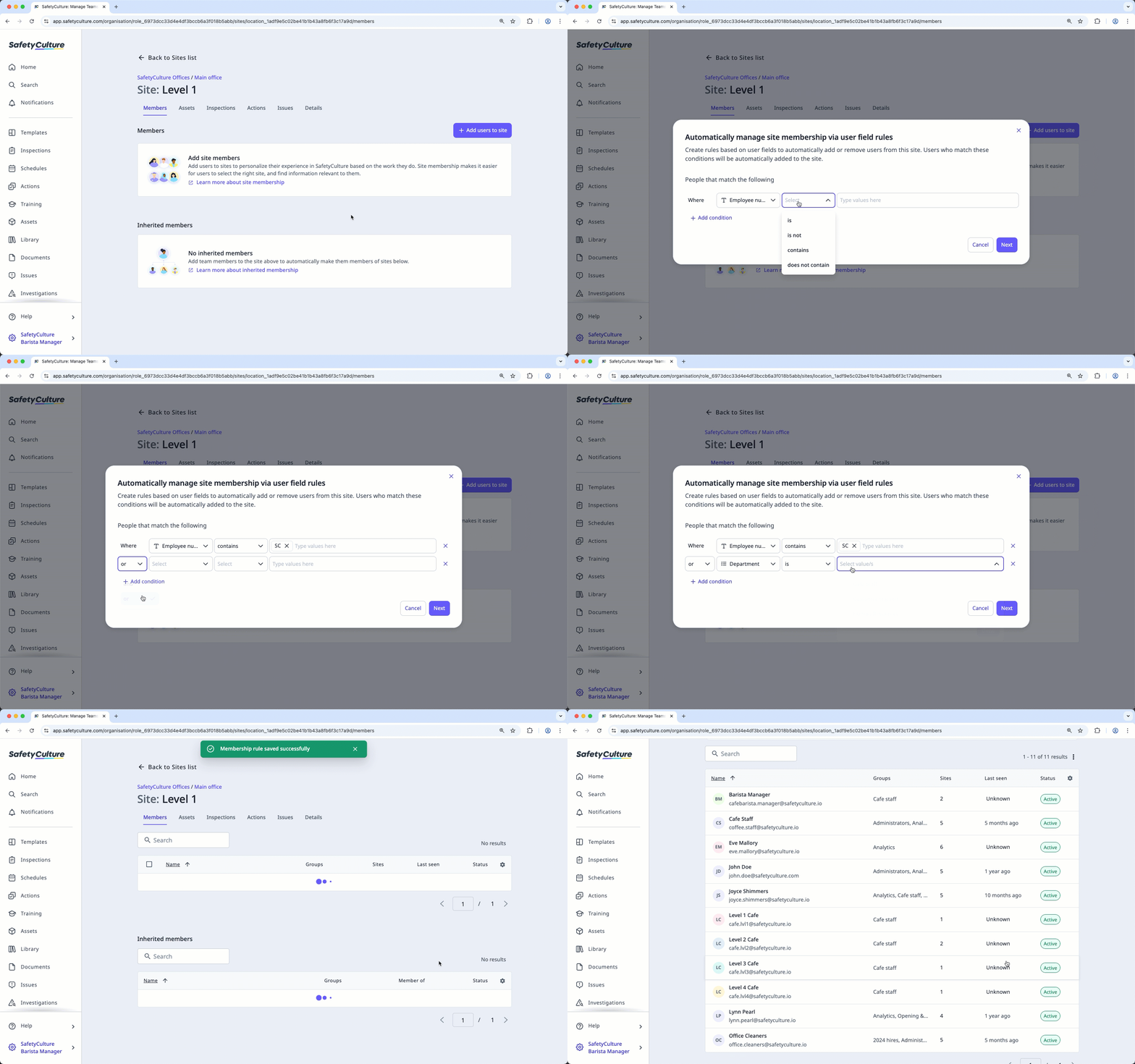
To streamline site membership, you can create rules that automatically add or remove users from sites based on their custom user fields, so you don't have to update site membership manually.
Direct membership
You can add users as site members directly at each level so that they can access only what's relevant to them. Direct members only have access to the site or level they're added to and don't inherit membership from any sites above them in your hierarchy.
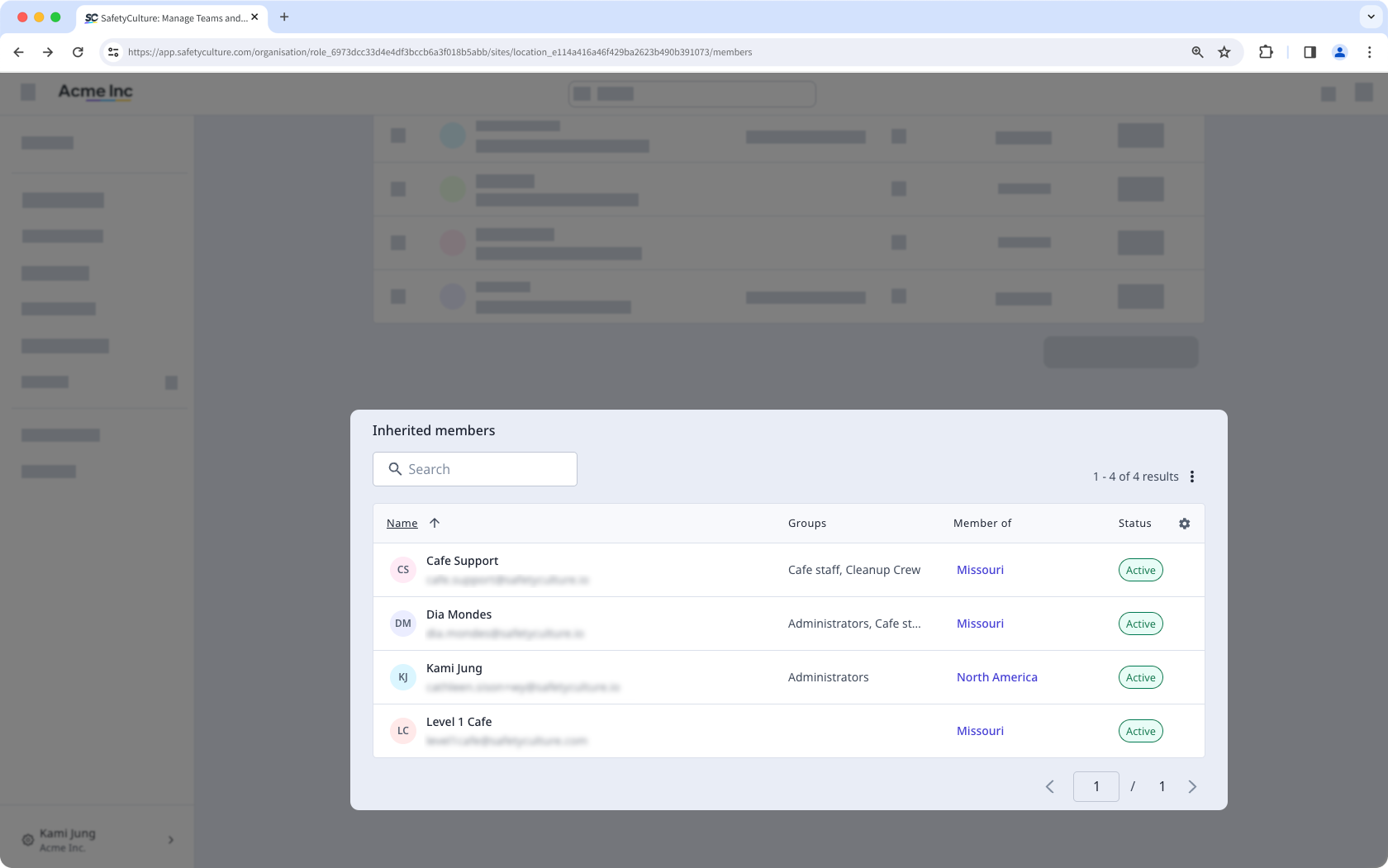
Inherited membership
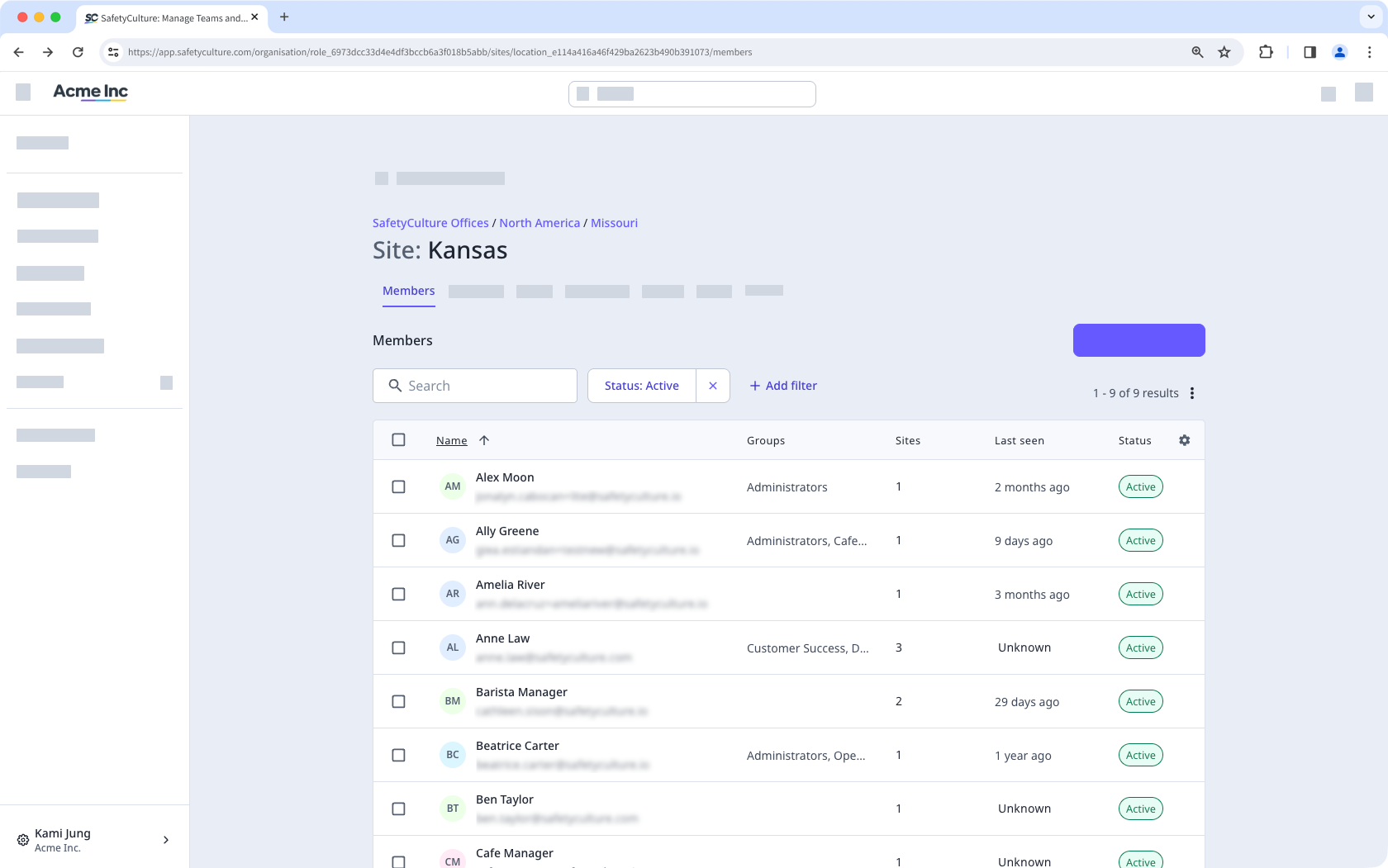
When you add a user to a parent level, they automatically inherit membership at all levels below it in the hierarchy. For example, if your hierarchy runs USA → Missouri → Kansas City and you add a user to Missouri, they automatically inherit membership of Kansas City.
Access and assignments
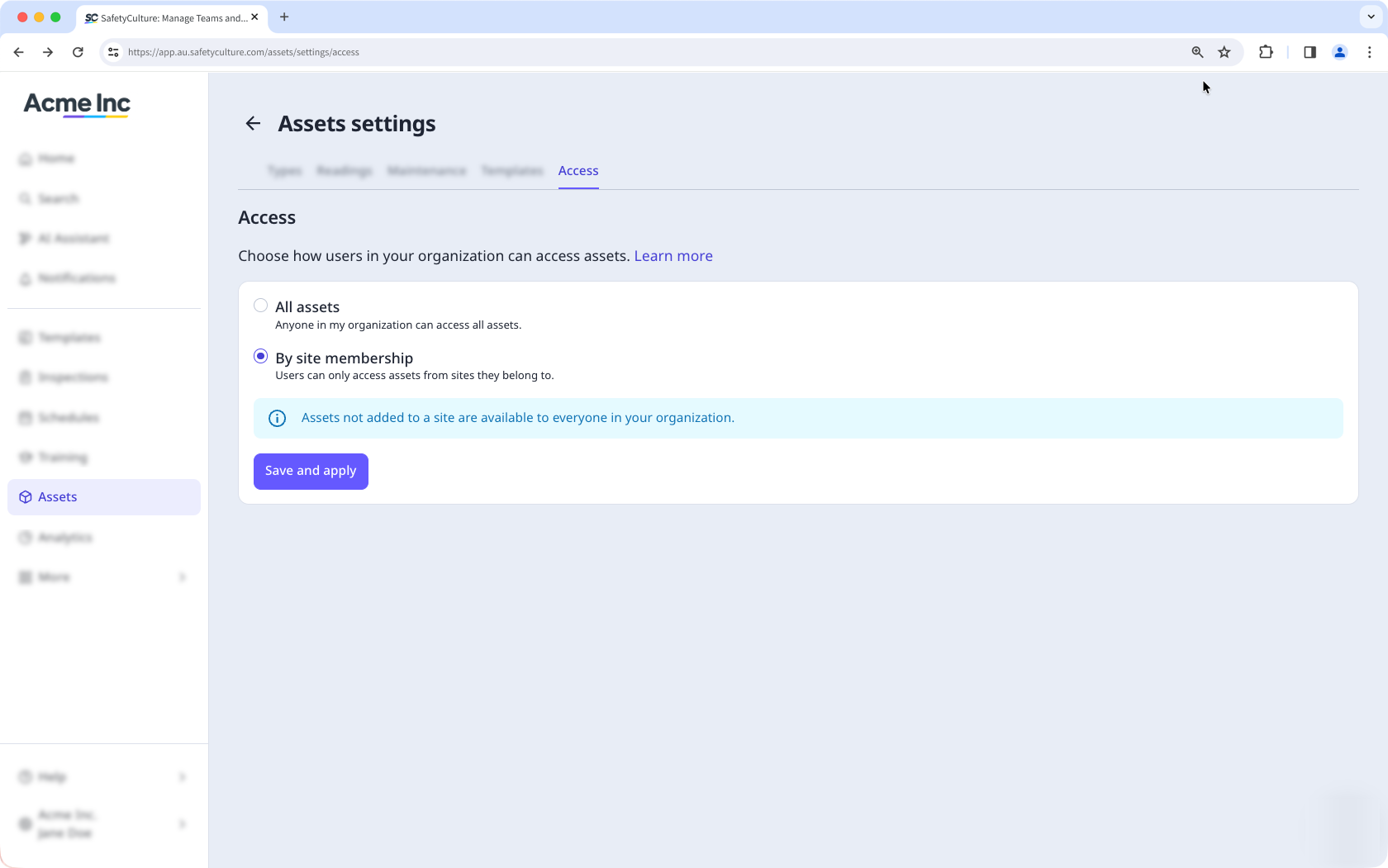
Site-based access
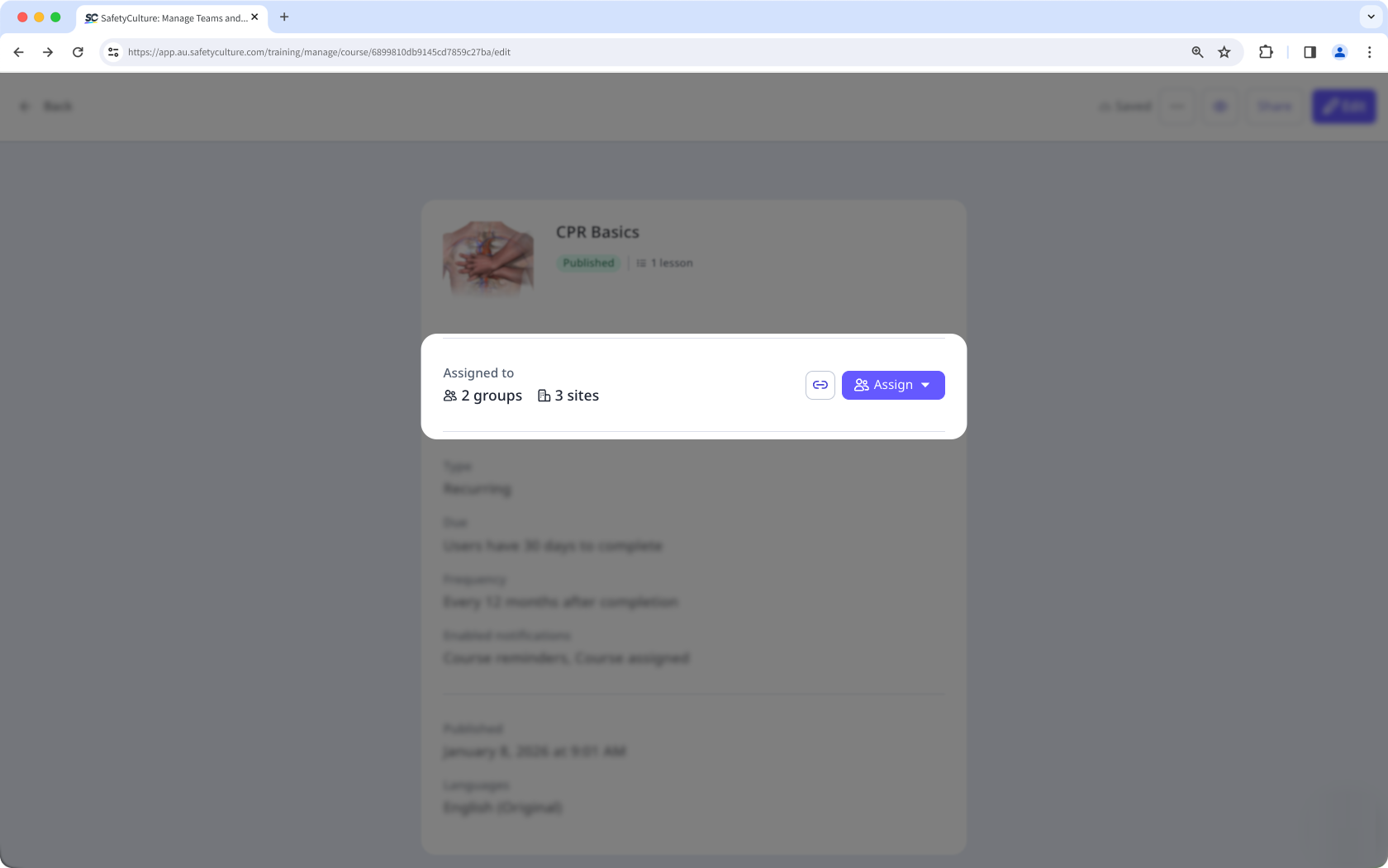
Site-based access lets you give access or assign items based on user's site membership. Anyone who is a member of the selected site, or any site within its hierarchy, automatically gets the same assets, template and inspection access or is assigned the same courses, quizzes, issues, or other items where site-based access is available.
Advanced access rules
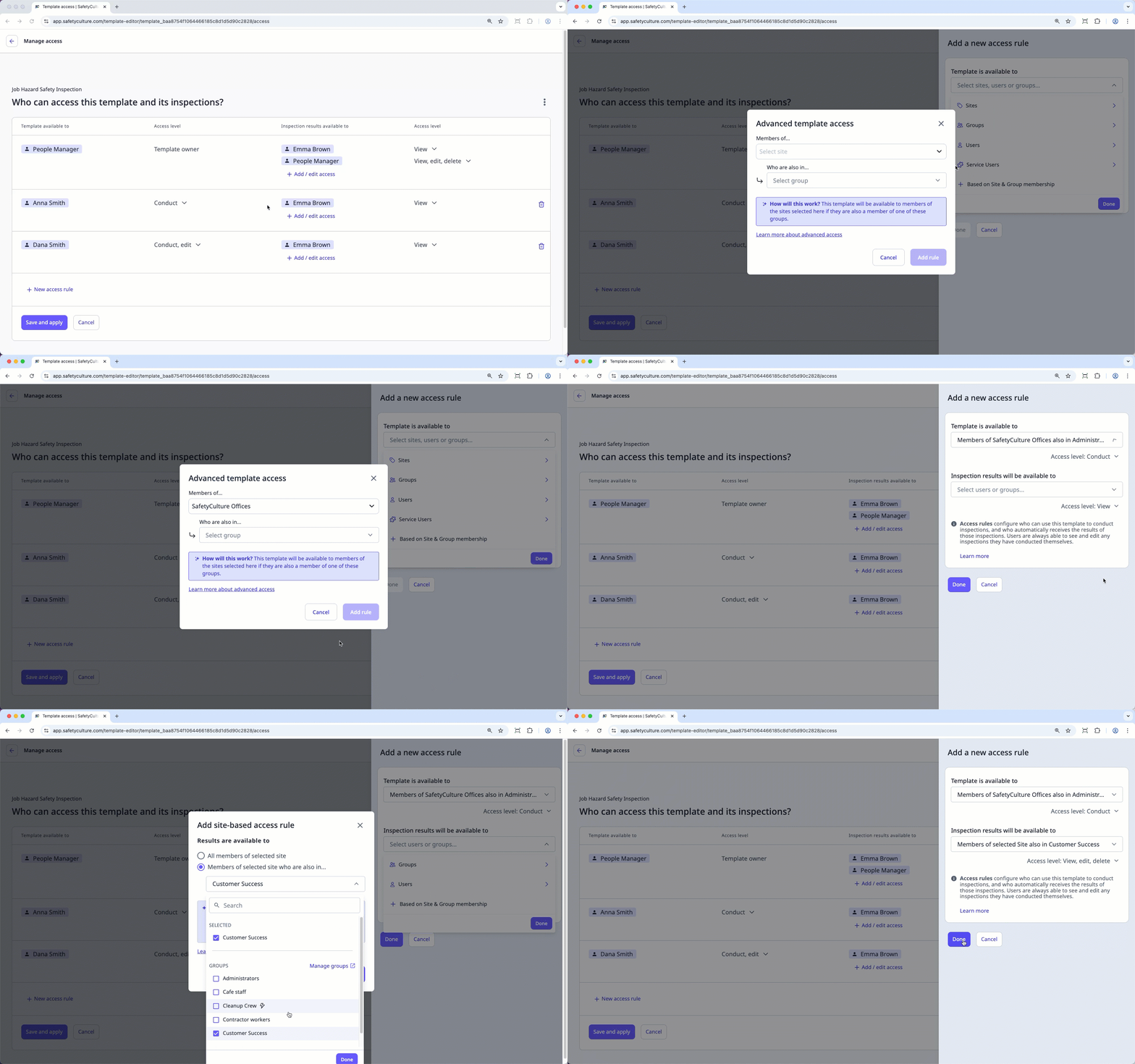
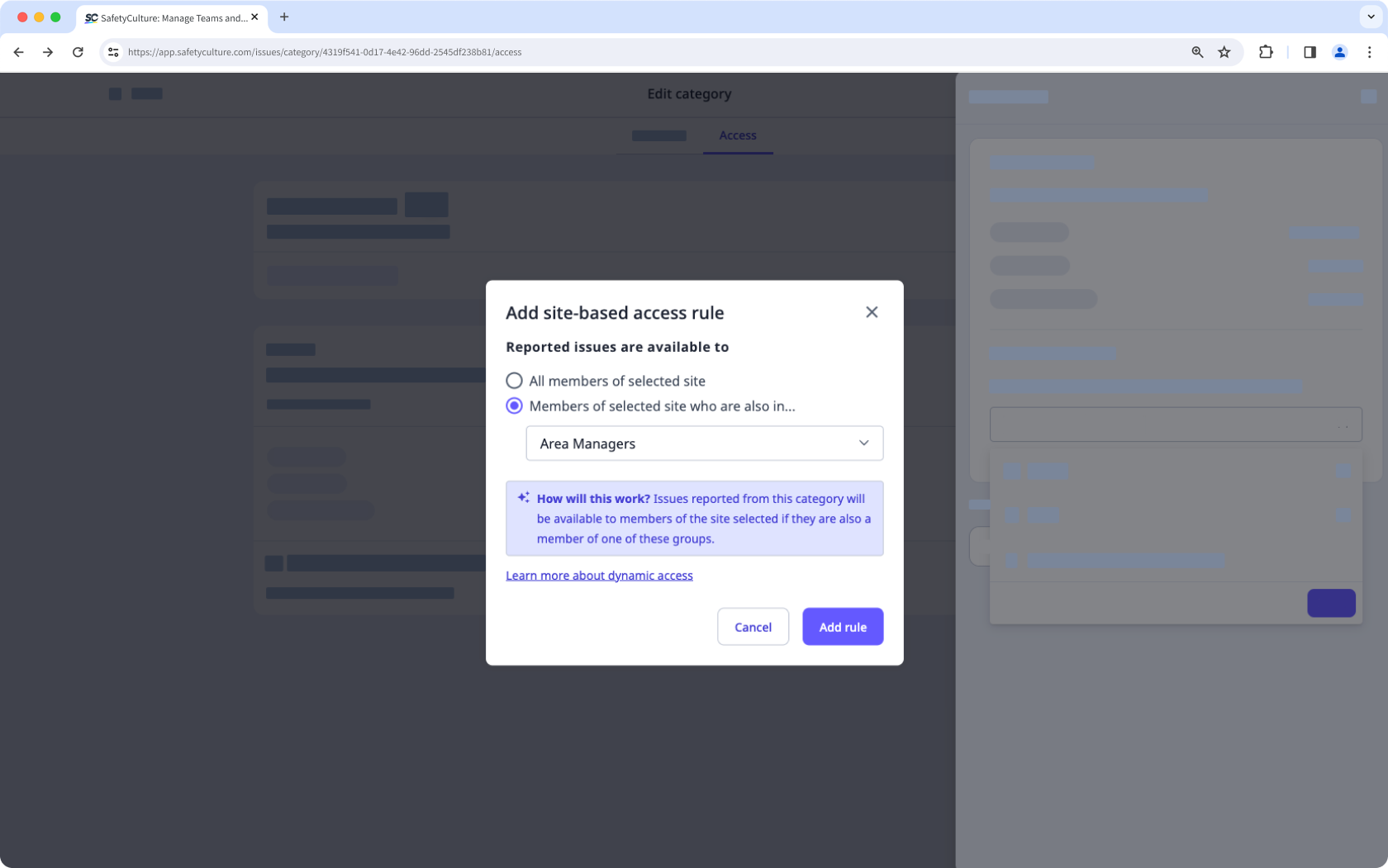
Advanced access rules help you manage access and assignments using both site and group membership. Instead of giving access or assigning items to everyone in a site, you can target specific users who belong to particular groups within that site. This gives you more precise control, especially in larger or more complex organizations.
With advanced access rules, you can:
Grant access to specific templates and inspections dynamically.
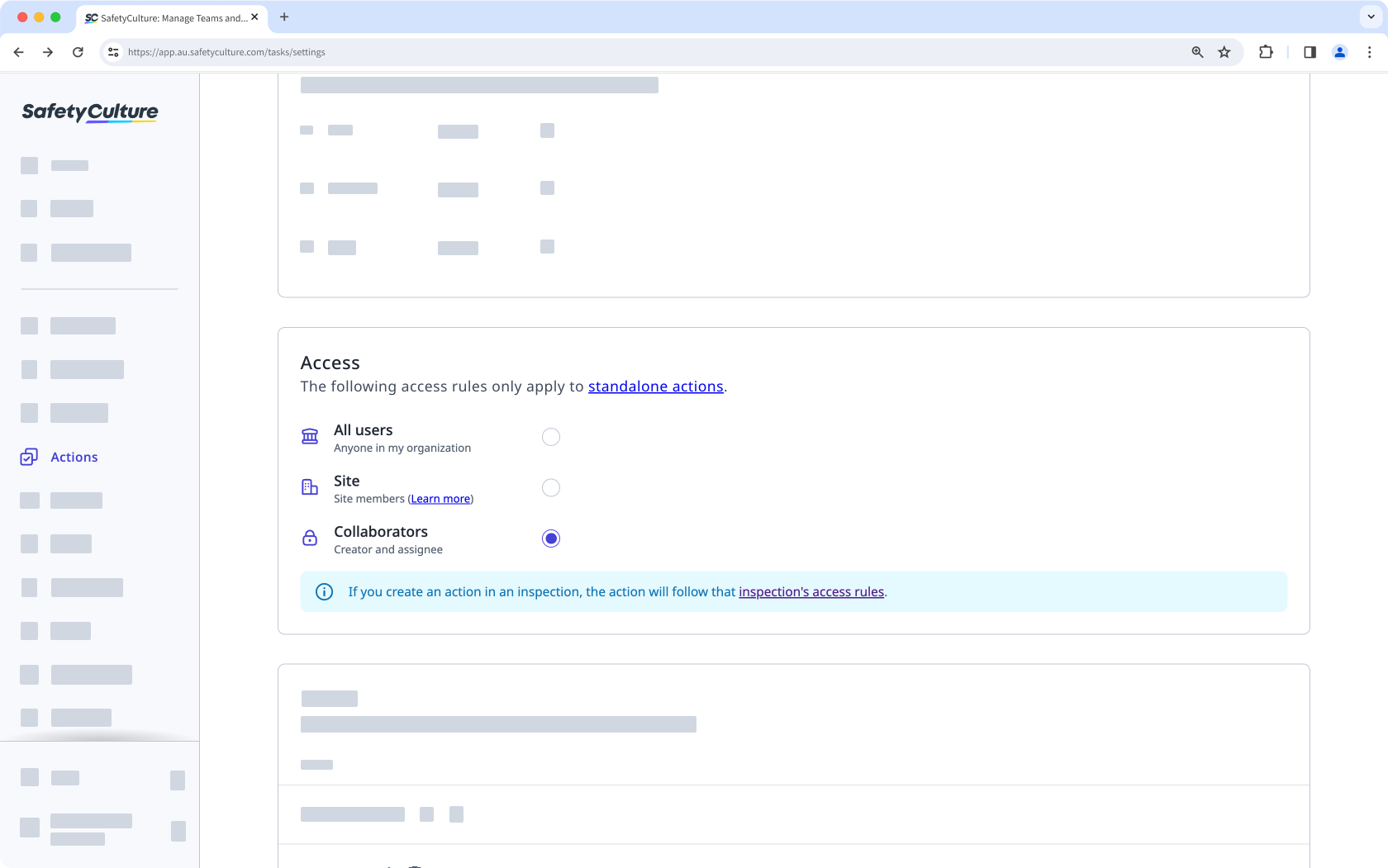
Specify who can access standalone actions in your organization.
Manage issue access based on group or site membership, ensuring that only designated members can view or resolve issues.
Data filtering
Site selection settings
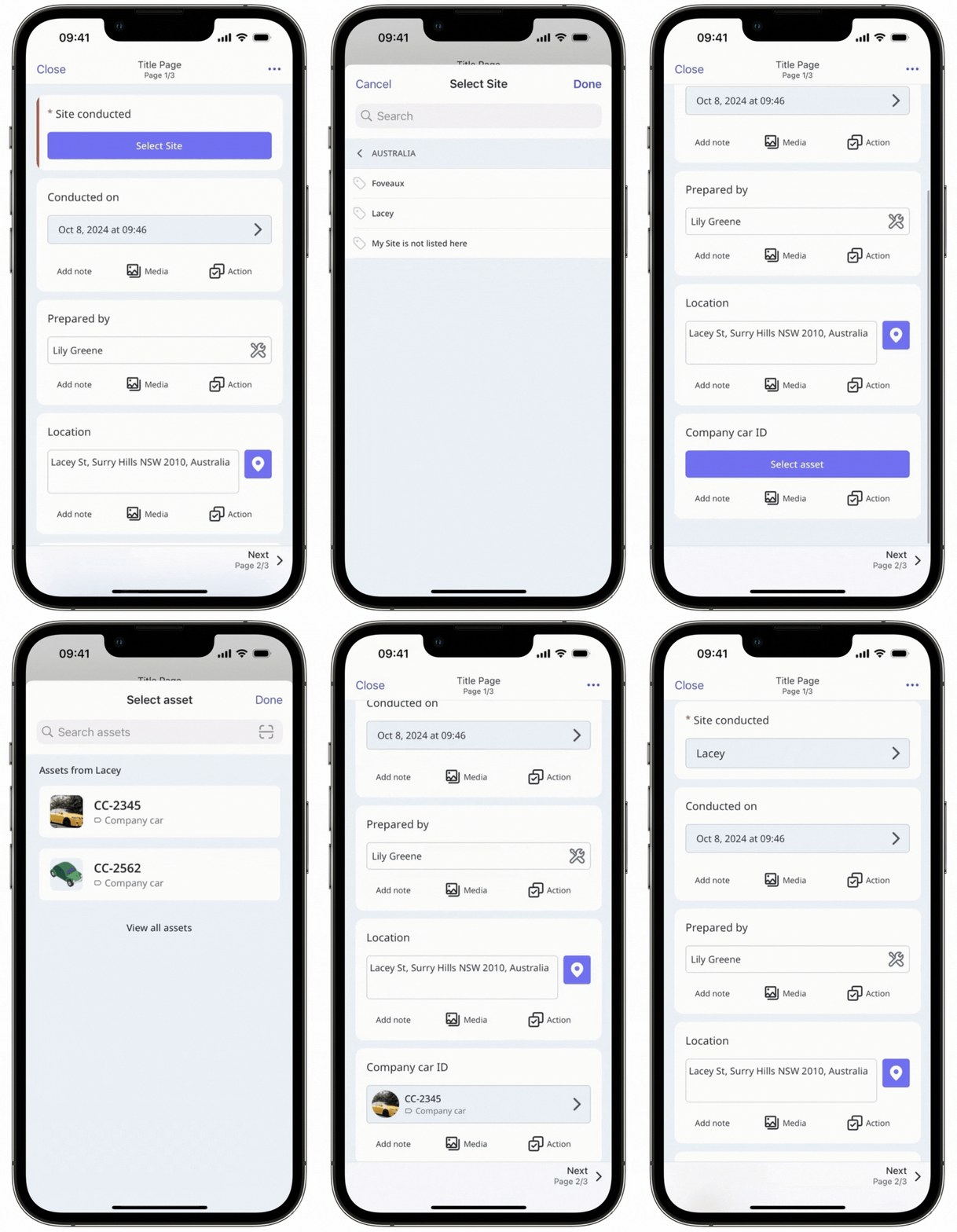
Manage which sites users see when selecting items for inspections, assets, schedules, actions, and issues with site selection settings.
Depending on the setting, users can view all sites or only the ones they belong to when selecting a site. For further control over site selection, you can turn on or off the ability to select "My site is not listed here", providing you with confidence that your users can select the appropriate sites. You can also view entities associated with a specific site directly from its profile.
Sites in Investigations
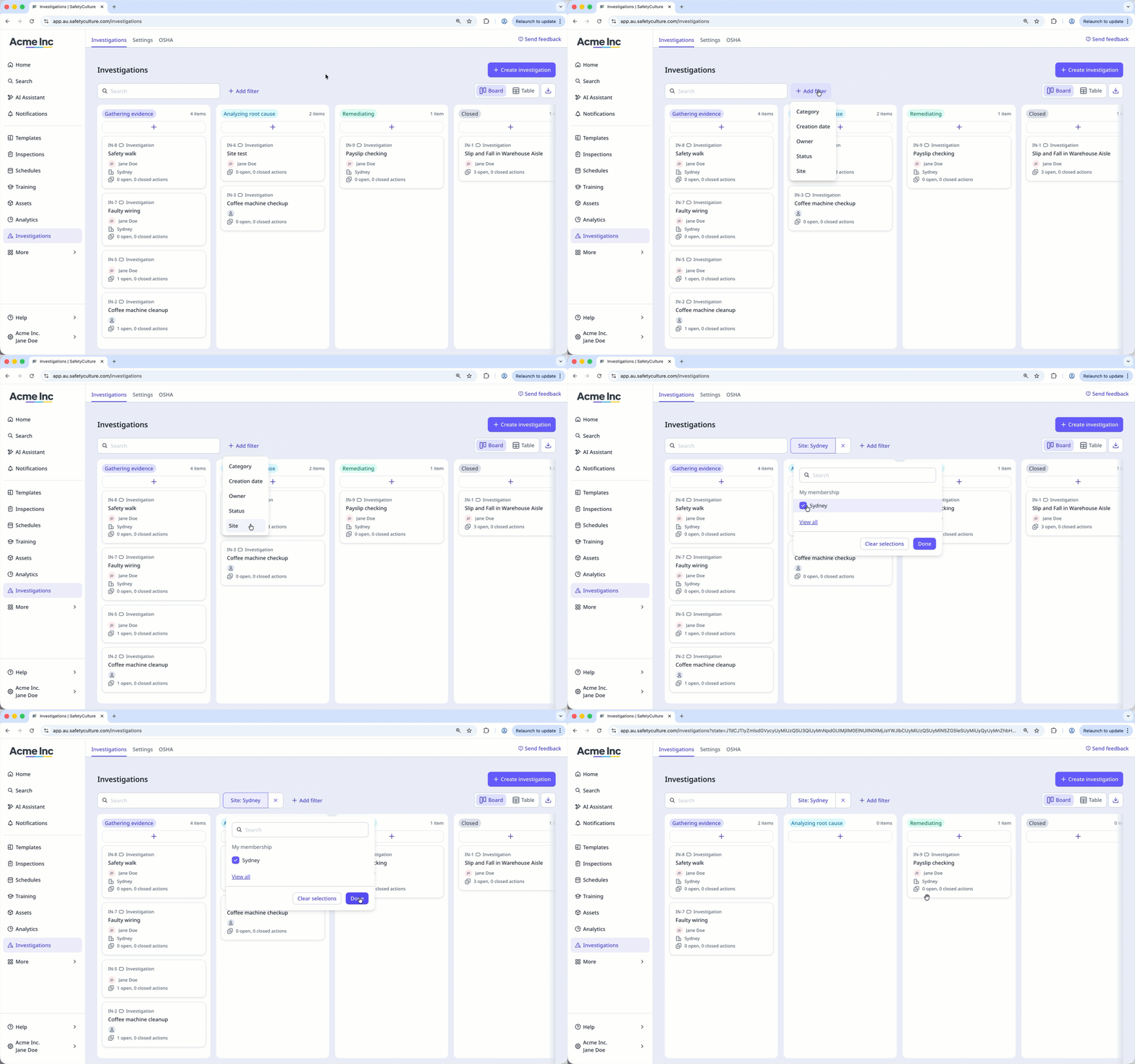
For Investigations, sites are used to tag where an incident occurred and to filter or group investigations with sites, including multiple sites. When you update the site of an investigation, you only change how the investigation is organized, you don’t give or remove access for site members.
Sites in Documents
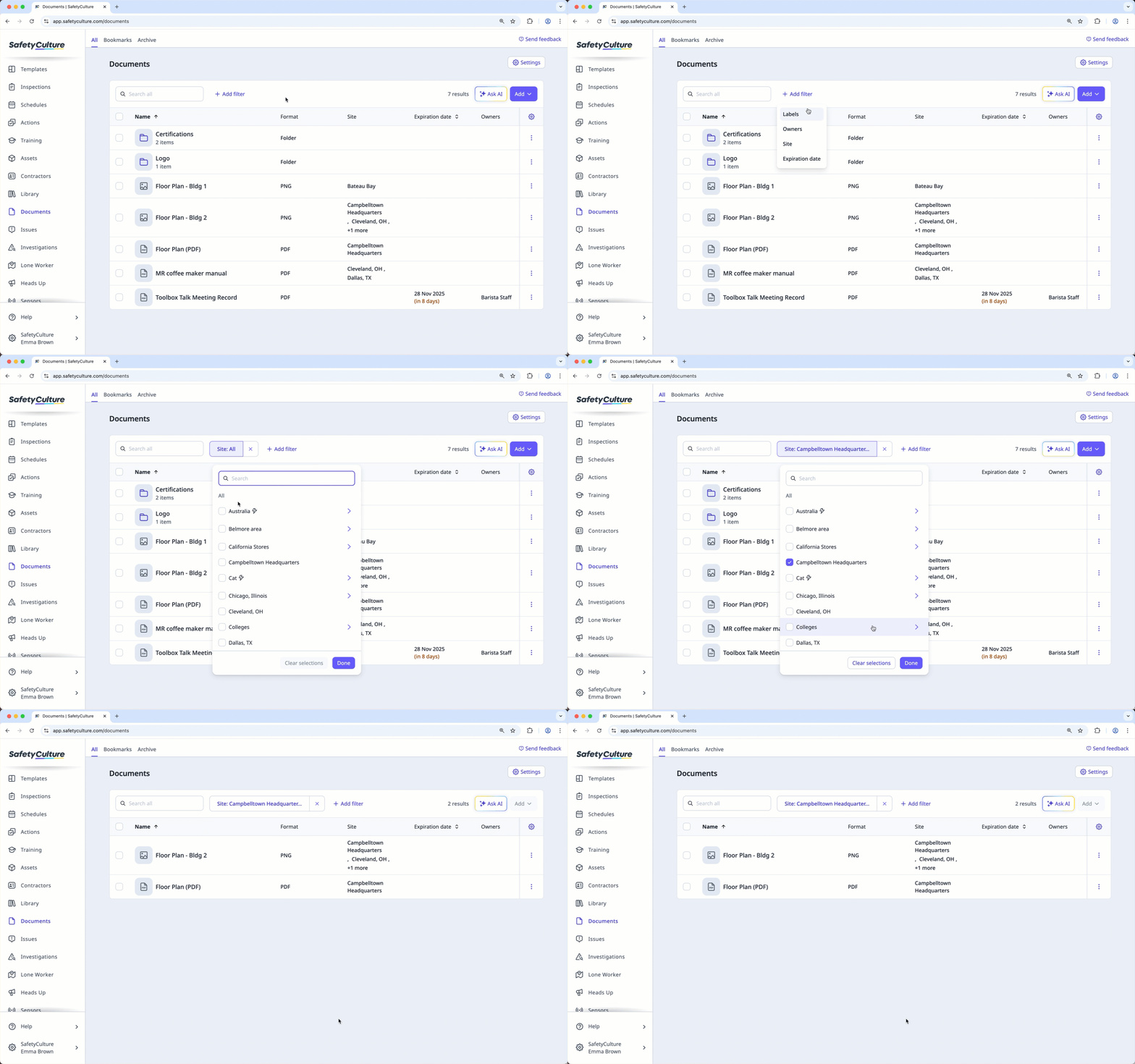
In Documents, sites help you organize and filter files, not decide who can view or edit them. You assign files to sites so you can filter by location and quickly find the files linked to each site.
Sites in Analytics
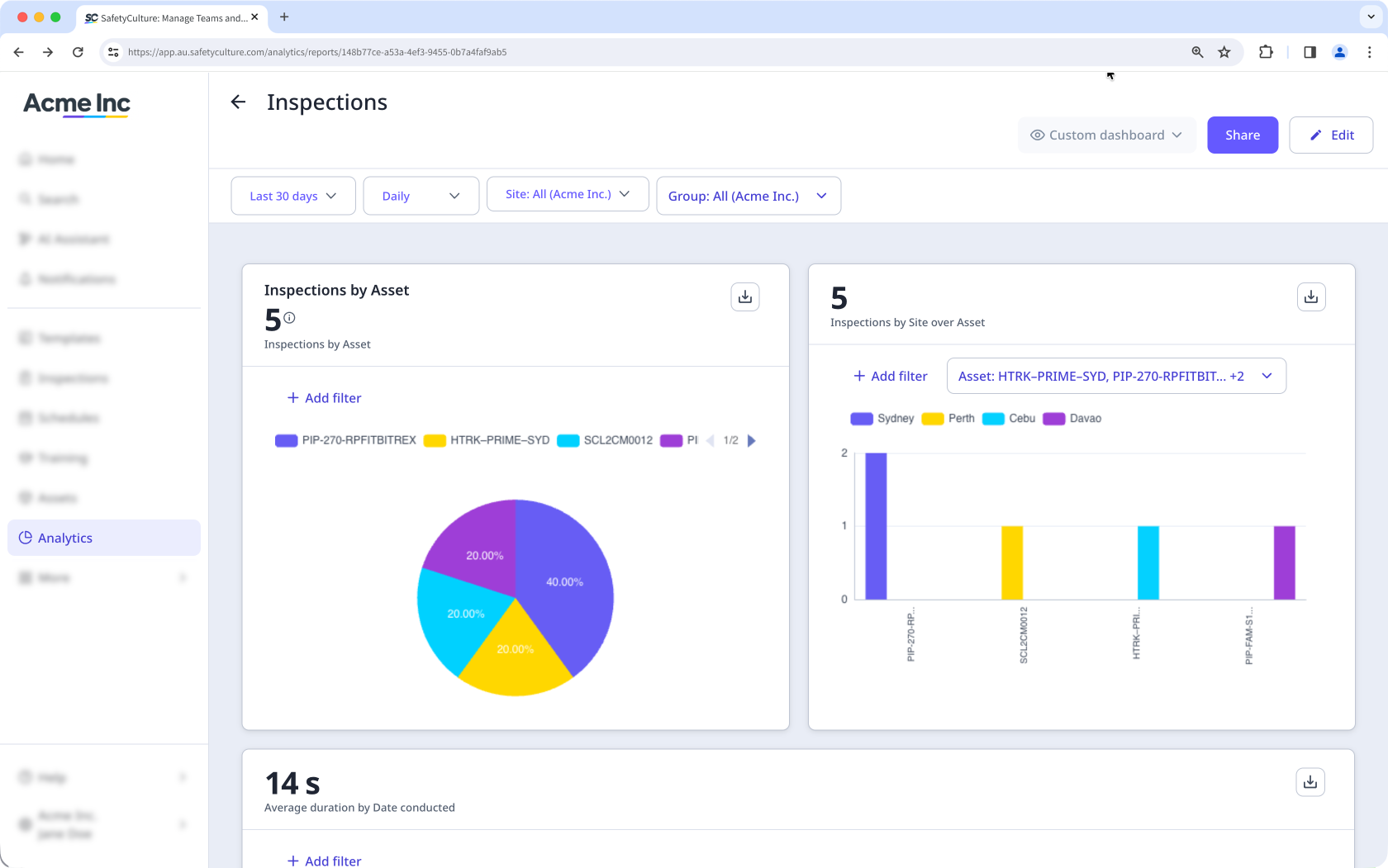
In Analytics, you can narrow your data to display specific sites. For instance, you can set your dashboard to show data on Assets and narrow it down by sites.
Sites in Contractors
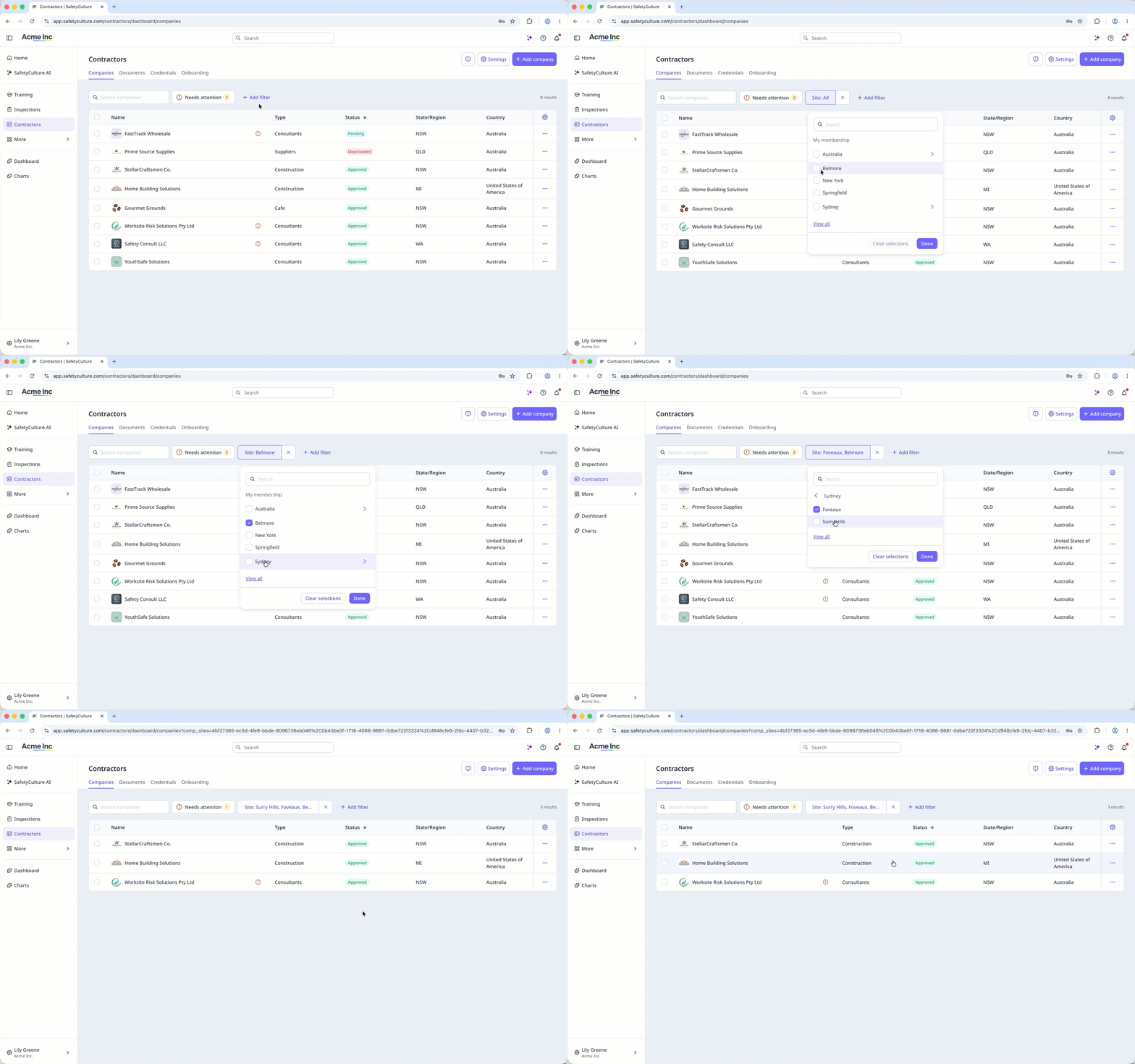
In Contractors, sites help you organize and filter the companies you work with. You can assign companies to sites to easily find which contractors are working at each site.